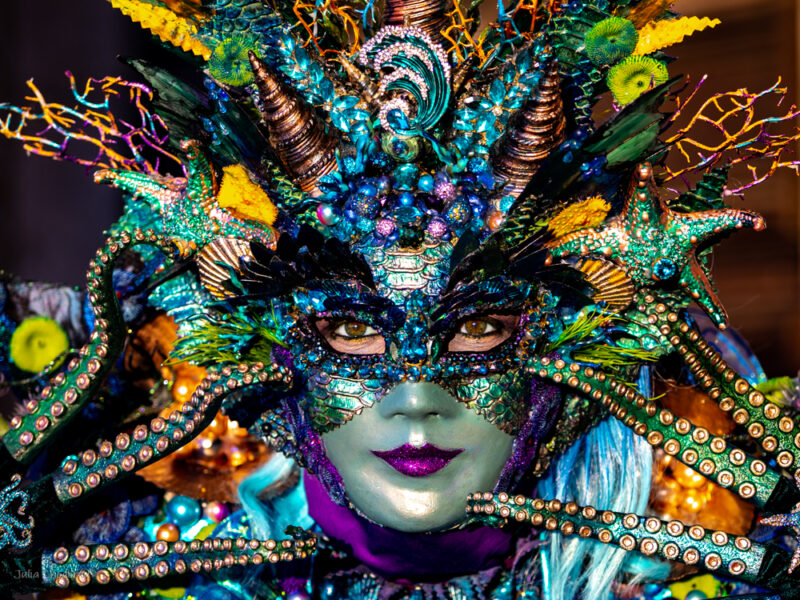
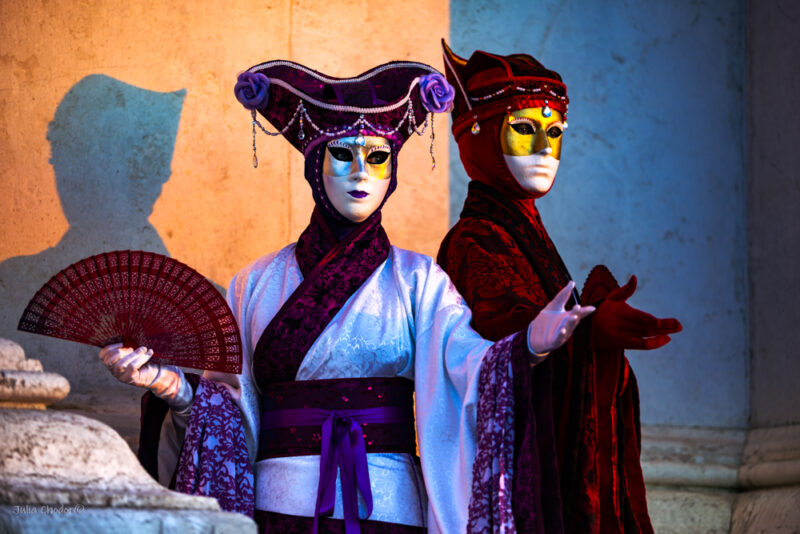
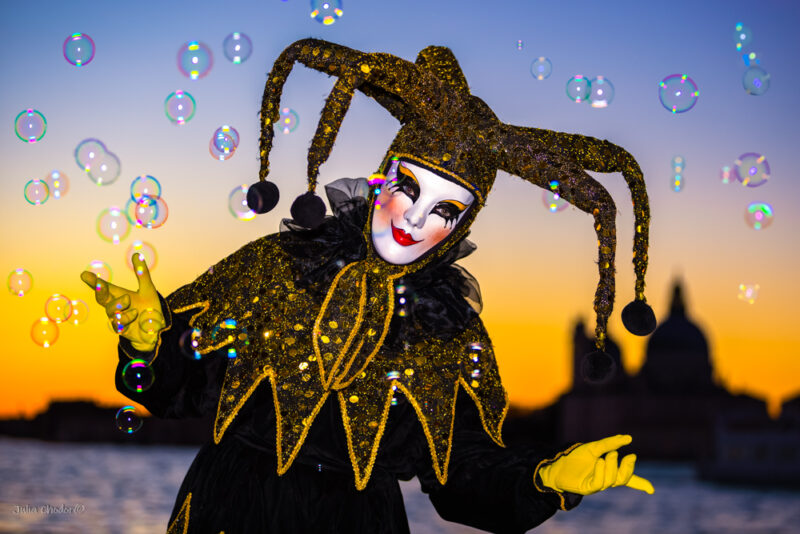
PL: (English version below) Wenecki karnawał to widowisko o niezwykle długiej historii, którego korzenie sięgają XIII w. To wtedy narodziła się tradycja przywdziewania kunsztownych kostiumów i tajemniczych masek, pozwalających każdemu choć na chwilę porzucić własną tożsamość i zatracić się w magii pływającego miasta.
EN: The Venice Carnival is a spectacle with an incredibly long history, dating back to the 13th century. It was then that the tradition of donning elaborate costumes and mysterious masks was born, allowing everyone to momentarily shed their identity and lose themselves in the magic of the floating city.
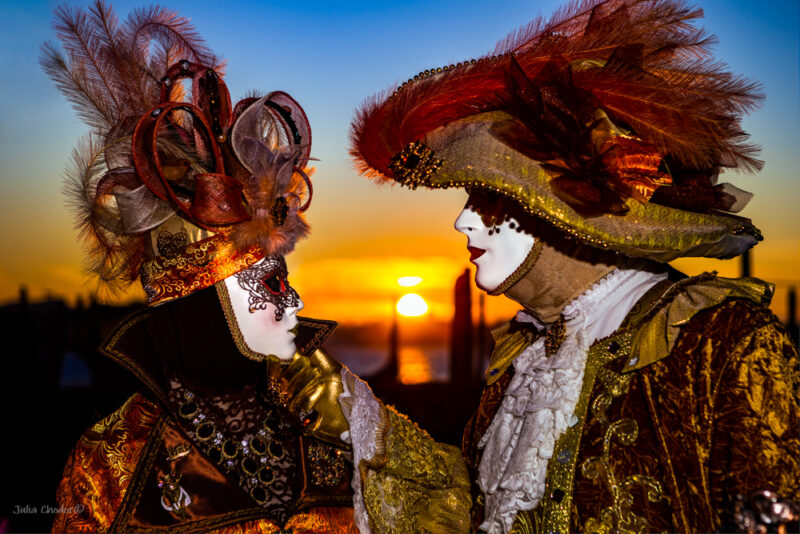
PL: W XVIII wieku Wenecjanie mogli nosić maski przez niemal pół roku (od października do Wielkiego Postu). Pozwalało to na anonimowe wizyty w kasynach, teatrach, a nawet klasztorach, zacierając granice między arystokracją a biedotą.
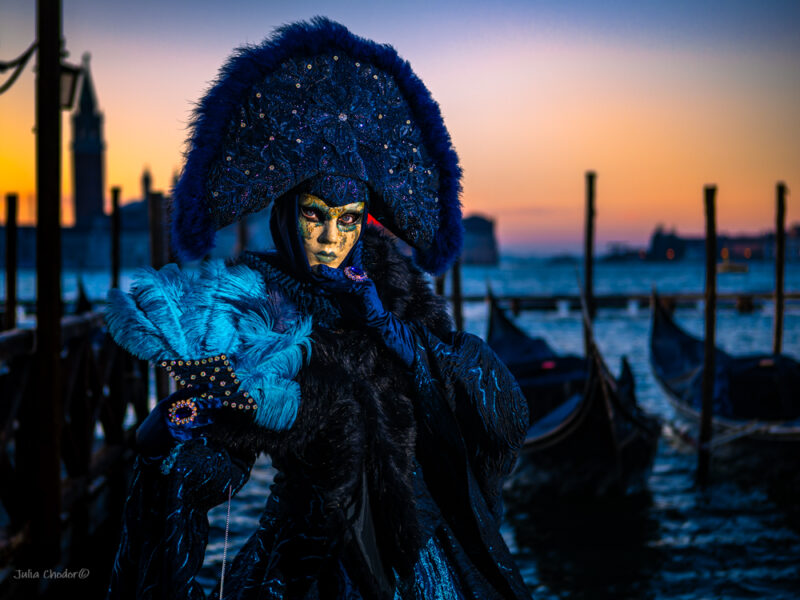
EN: In the 18th century, Venetians were allowed to wear masks for almost half the year (from October to Lent). This allowed anonymous visits to casinos, theaters, and even monasteries, blurring the lines between the aristocracy and the poor.
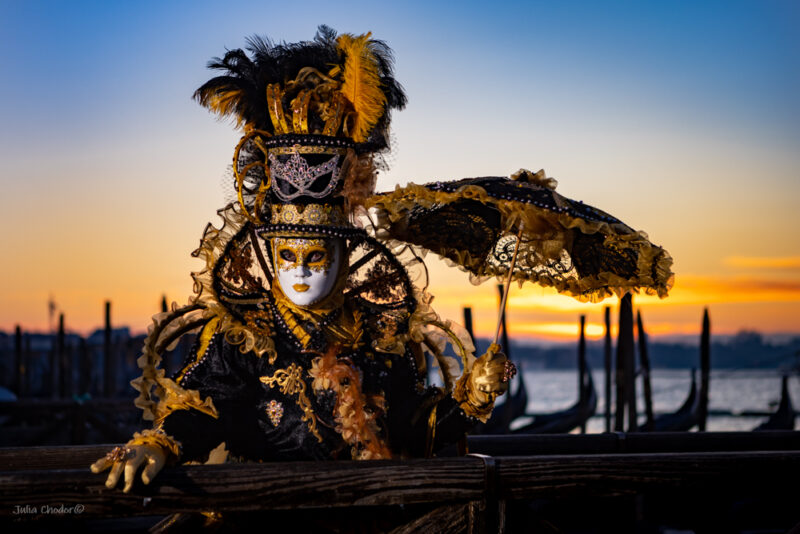
PL: Do najbardziej znanych typów masek należą:
Bauta, to najbardziej zagadkowa z masek, charakteryzują ją ostre rysy i wysunięta dolna część. Zmieniała ona głos noszącego. Zapewniała pełną anonimowość, pozwalając na swobodne rozmowy bez względu na status społeczny.
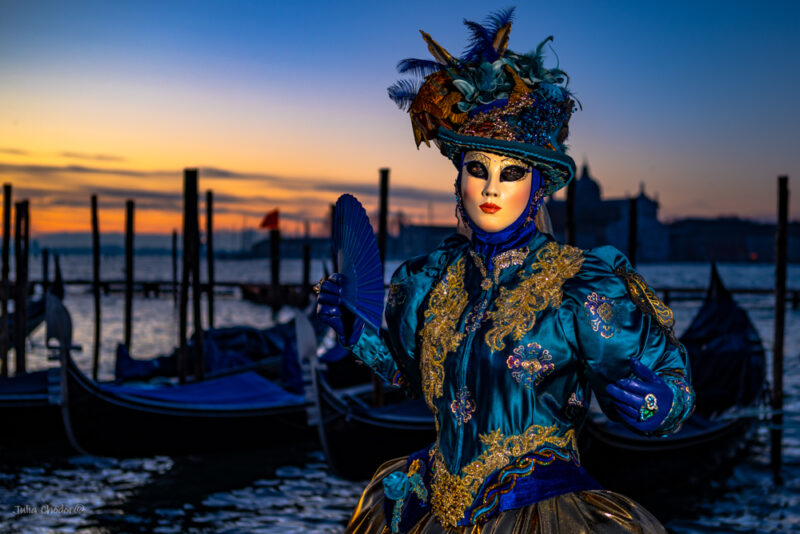
EN: The most famous types of masks include:
Bauta is the most enigmatic of masks, characterized by sharp features and a prominent jawline. It altered the wearer’s voice and provided complete anonymity, allowing for free conversation regardless of social status.
PL: Medico della Peste – maska “Lekarza Dżumy” z charakterystycznym, długim dziobem. Pierwotnie miała chronić przed chorobą, ale z czasem stała się mrocznym, a zarazem fascynującym symbolem karnawałowej gry ze śmiercią.
EN: Medico della Peste – the “Plague Doctor” mask, with its distinctive long beak. Originally intended to protect against disease, it evolved over time into a dark yet fascinating symbol of the carnival’s dance with death.
PL: Colombina, to delikatna półmaska, często zdobiona złotem, srebrem i piórami. Według legendy powstała dla pięknej aktorki, która nie chciała całkowicie zasłaniać swojej twarzy.
EN: Colombina is a delicate half-mask, often adorned with gold, silver, and feathers. Legend has it that it was created for a beautiful actress who did not wish to conceal her face entirely.
PL: Moretta – mała, owalna maska z czarnego aksamitu, noszona przez kobiety. Była to maska “niema” ponieważ, by utrzymać ją na twarzy, należało zagryźć wewnątrz specjalny guzik, co dodawało damom aury niedostępności i milczącej tajemnicy.
EN: Moretta – a small, oval mask made of black velvet, worn by women. It was a “mute” mask because it was held in place by biting a button on the inside, lending the ladies an air of aloofness and silent mystery.
PL: Tradycyjna maska nie jest zrobiona z plastiku czy gipsu, lecz z papier-mâché (wł. cartapesta). To rodzaj specjalnego, miękkiego papieru, który układa się warstwami w gipsowej formie. Dzięki temu maska jest lekka i „oddycha” na twarzy.
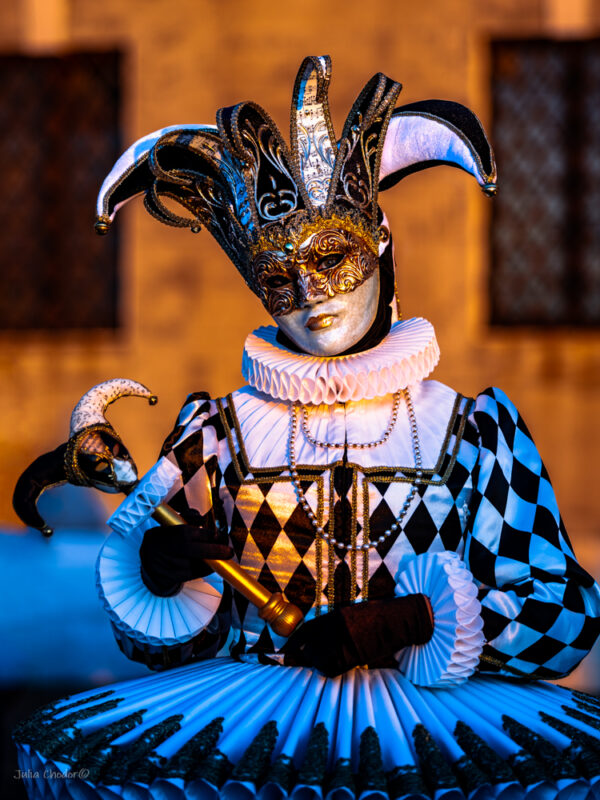
EN: The traditional mask isn’t made of plastic or plaster, but of papier-mâché (Italian: cartapesta). This is a type of special, soft paper that’s layered in a plaster mold. This makes the mask lightweight and breathable on the face.

PL: Już w 1436 roku twórcy masek w Wenecji doczekali się własnego statutu i cechu. Byli szanowanymi rzemieślnikami, stawianymi na równi z malarzami, co podkreślało artystyczną rangę ich pracy.
EN: As early as 1436, mask makers in Venice had their own statute and guild. They were respected craftsmen, considered on a par with painters, underscoring the artistic importance of their work.